

Stefano Lissi
Stefano Lissi is a PhD-Candidate in History of the International Relations at Utrecht University. His PhD project investigates ideas of transnational solidarity between the processes of national unification in Italy and Germany (1830-71).
“So, when do we start waving our sabres?” asked Hermann von Rauschenplat while entering the house of his friend Harro Paul Harring in the Swiss Alps on 3 November 1833. Harring reassured his impatient friend: “Soon, very soon, we are only waiting for Mazzini’s signal to start our invasion of the kingdom of Piedmont.” This brief blogpost will explore how security policies turned Switzerland into a hotbed of transnational revolution in 1833-34, and how they indirectly contributed to the creation of a radicalized emotional community of political exiles. It will focus on one of these revolutionary projects, whose transnational dimension has often been glossed over by nation-centric historiography.
Security and exile
In that moment, Harring and Rauschenplat were perhaps the most charismatic figures of German republicanism in exile. A prolific poet from Schleswig, the 35-year-old Harring was a veteran revolutionary. He had fought in the Greek War of Independence, in the Polish uprising of 1830-31 and had also participated to the Hambacher Fest of 1832. The embodiment of the quintessential romantic revolutionary, Harring described himself as a rebelle ready for martyrdom to defend the sacred values of nationality and republicanism. Compared to Harring, the 26-year-old Rauschenplat, a former law professor at the University of Göttingen, looked like a more tranquil character. Appearances, however, were deceptive. His students had nicknamed him le chat sauvage, because, whenever he spoke about politics, his eyes used to bulge like those of a feline ready to attack. He too was a republican hardliner, forced into exile due to his revolutionary activities. In April 1833, he had been one of the main instigators of the Frankfurter Wachensturm, a failed republican coup against the Bundestag.
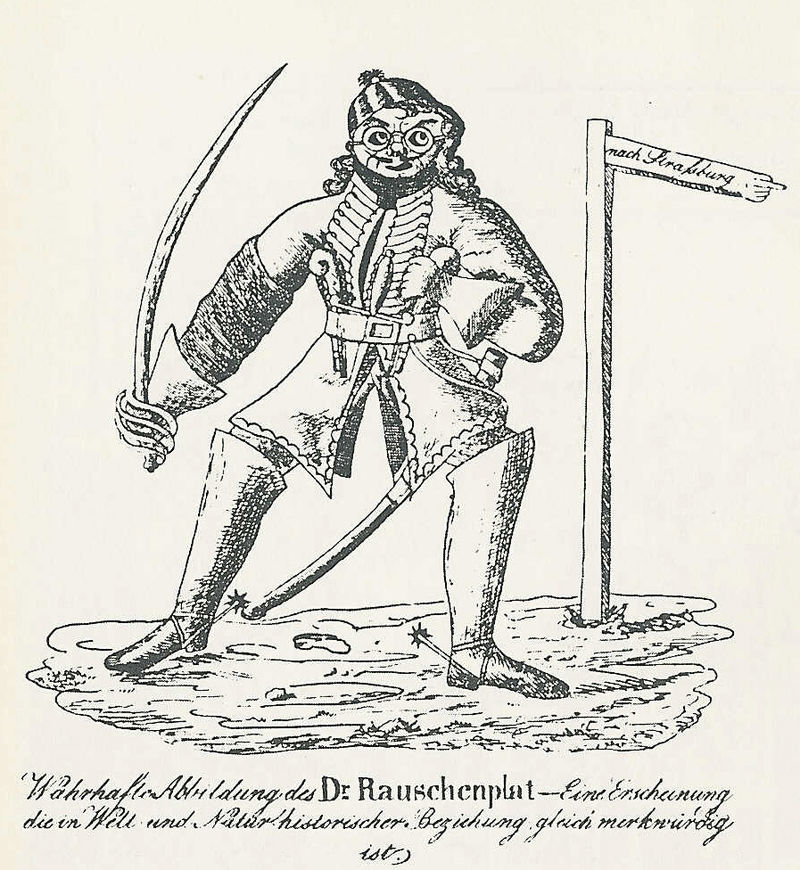
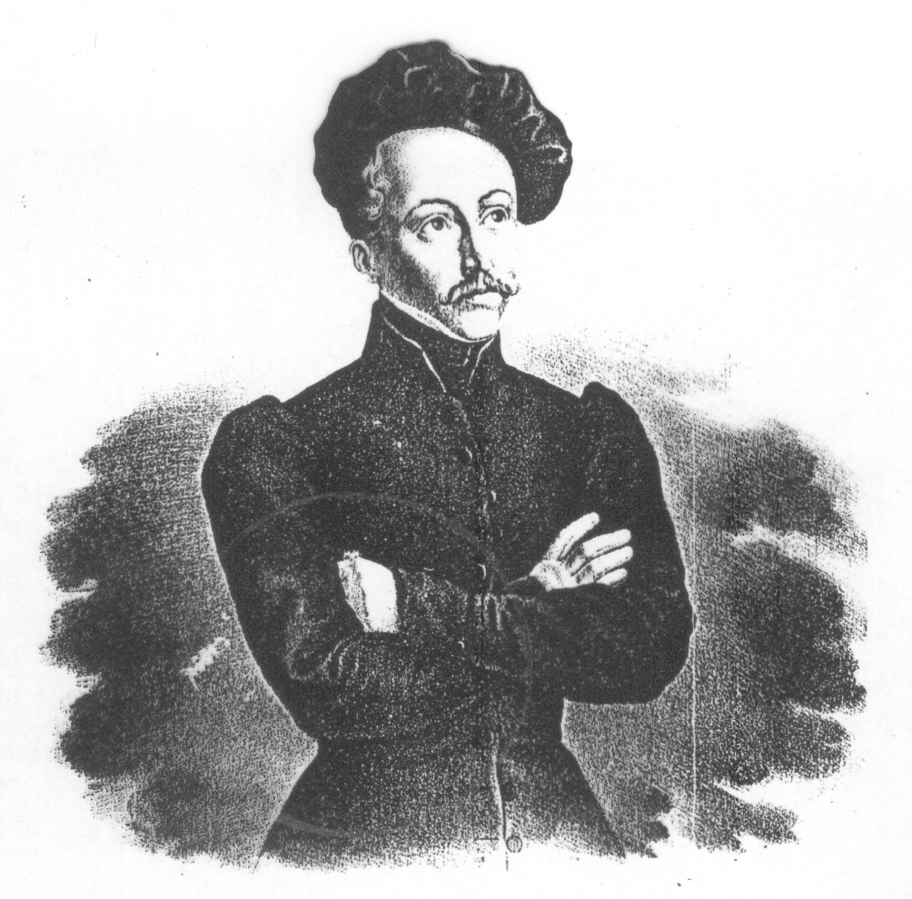
The two friends were not the only ones to have left their homeland due to their political activities. After the failure of the Italian and Polish revolutions of 1830-31 and the uprisings in Germany in 1832-33, thousands of Italian, Polish, and German political agitators had fled to Switzerland to escape police repression. Thus, rather than dispersing the forces of revolution, the security measures undertaken by the European states ended up concentrating them in a single location. By the end of 1833, the small Alpine confederation had become a transnational meeting point for European republicans and the cradle of a proper emotional community bound by the shared experience of exile. Such a peculiar backdrop meant also that Switzerland became a political laboratory of republican ideas and a breeding ground for transnational revolutionary projects.
Preparing the invasion
The most ambitious of these revolutionary projects came from Giuseppe Mazzini. The famous Italian revolutionary – himself a political exile in Switzerland – had been working tirelessly during the spring-summer of 1833 to organize a large armed expedition into the kingdom of Piedmont-Sardinia. The proposed strategy was that of a pincer movement: a thousand Polish, German, French and Italian volunteers were supposed to invade the Piedmontese province of Savoy from Switzerland and the French province of Isère, inciting local insurrections against King Carlo Alberto. At the same time, a second group, led by Giuseppe Garibaldi was entrusted with igniting the revolution in the port of Genoa, and taking control of the Piedmontese navy. Thanks to Mazzini’s numerous contacts in the peninsula, the revolution was then supposed to spread in the other Italian states, a centrifugal force irradiating from the cities to the countryside. Therefore, the Savoy expedition was meant as the first significant step towards the construction of a united and republican Italy.
On paper, the plan had potential. To finance the expedition, Mazzini had accumulated half a million francs – a considerable sum for the time, mostly from rich Italian patriots in exile such as Countess Cristina di Belgioioso and Marquis Gaspare de Rosales. With these funds, some 1700 rifles and hundreds of thousands of cartridges had been purchased and smuggled into Switzerland. Moreover, some of the leaders of the expedition were seasoned soldiers. One of these was Count Carlo Bianco di Saint-Jorioz, who had accumulated considerable experience in the art of guerrilla warfare fighting the royalists in Spain in 1823. As supreme commander, Mazzini had chosen general Girolamo Ramorino, a veteran of the Napoleonic wars and the Polish uprising of 1831. Moreover, hundreds of German, Polish and French political exiles had enlisted as volunteers. Some of these transnational volunteers were attracted by the charismatic figure of Mazzini, whom Harring described as similar to “Socrates, surrounded by his pupils or like Christ, the divine man, in the midst of his apostles”. However, others like Rauschenplat had enlisted more out of pure transnational solidarity with a fellow republican cause, or as Harring jokingly highlighted, “because they were also spoiling for a fight”.
Fracas in Savoy
Originally, the expedition was set to start in early November 1833. Thus, on 3 November Harring and Rauschenplat were impatiently waiting for the mobilisation signal.Instead of that, they received bad news: the expedition had been postponed by “one or two months”. In fact, General Ramorino had left for Paris with part of the funds to recruit more men but had not yet come back. After a frustrating wait of three long months, Ramorino finally returned, and the expedition was set for the beginning of February 1834.

The damage, however, had already been done.The number of foreign volunteers had halved: tired of waiting in vain, many of them had left for Egypt and France. Moreover, the expedition had lost the element of surprise. Having gained enough intelligence, Austria and Piedmont put considerable pressure on the Swiss cantonal authorities to nip Mazzini’s plan in the bud.In the days leading up to the expedition, the Swiss police seized many of the weapons and equipment in the border depots and arrested numerous transnational volunteers on their way to the Savoy border, including Rauschenplat himself. Forced to make do with what they had and in the grip of winter frost, the expedition – which finally launched on 1 February –“resembled a funeral procession, moving in the middle of the shadows of the night”. After just a few kilometres and a minor skirmish with the Piedmontese, Ramorino called off the advance and ordered the entire contingent back to Switzerland. Consequently, the insurrection in Genoa was also called off.
In the aftermath of the debacle, Ramorino and Mazzini tried to put the blame on each other. The former published a pamphlet where he rejected any responsibility and described the volunteers as reckless fanatics. Mazzini and Harring instead called Ramorino a traitor, who willingly sabotaged the expedition with his delays and lacklustre leadership. Unfortunately, this debate over the allocation of responsibilities has also monopolised the attention of most of the historiography produced on the Savoy expedition. Quite surprisingly, the significance of this historical event has instead never been investigated from a transnational perspective. As a result, the experiences of German and Polish volunteers in this innately transnational political undertaking have often been erased from history books, making the invasion to Savoy look more nationally homogenous than it really was.
Conclusion
As briefly explored in this blog, the expedition to Savoy constituted a telling example of the innate transnationality of revolutionary activities during the 19th century. The factors behind these transnational connections were manifold and were not limited to the individual charisma of seditious leaders or to shared political beliefs. Very often, transnational solidarity between revolutionaries was a direct consequence of the security strategies undertaken by European states. Indeed, these security policies often ended up radicalising and agglomerating seditious actors in the shape of exile communities. It was precisely thanks to these communities that a new European revolutionary culture was created in the 1830s. The effects of this shift would be visible in all their magnitude during the European revolution of 1848.
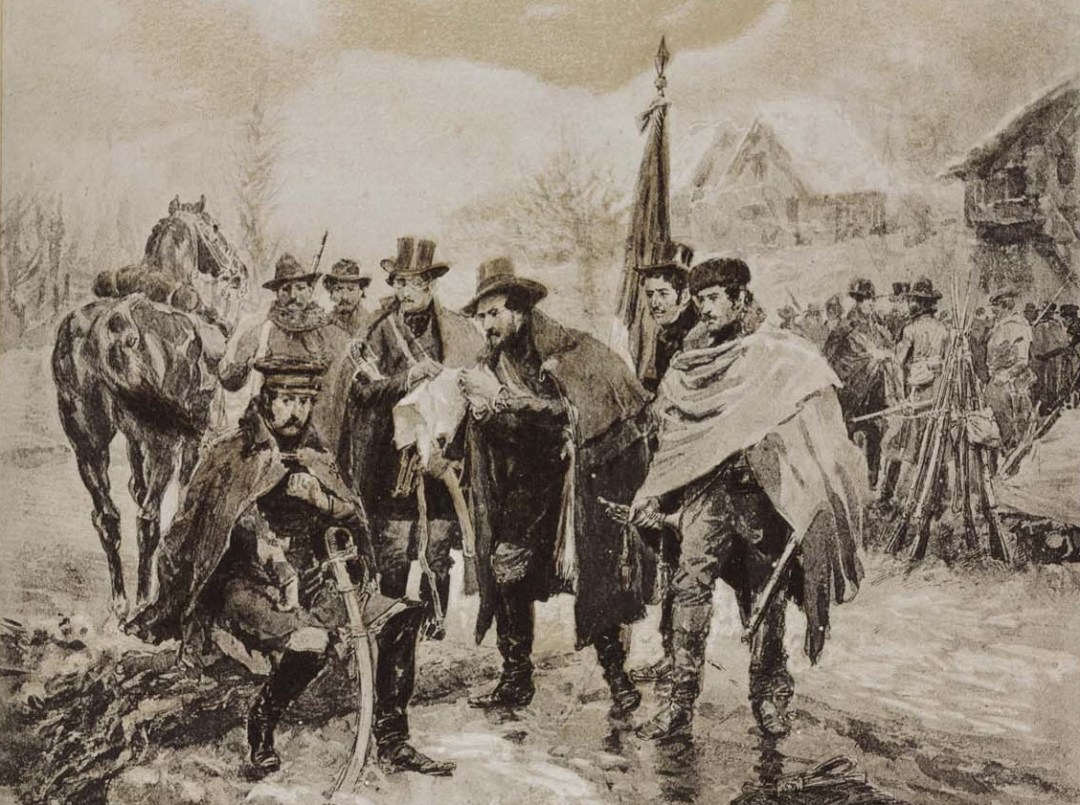
COVER IMAGE: Giuseppe Mazzini meeting General Ramorino on 1 February 1833, woodcut by Edoardo Matania. Museo centrale del Risorgimento di Roma, Italy. Public Domain.
Opinion pieces have been published by the Security History Network for the purpose of encouraging informed discussions and debates on topics surrounding security history. The views expressed by authors do not necessarily represent the views of the SHN, its partners, convenors or members.
 The Security History Network