

Prof. dr. Thomas Weber
Thomas Weber is Professor of History and International Affairs as well as the founding Director of the Centre of Global Security and Governance at the University of Aberdeen. He is a member of the Security History Network. His expertise lies in European, international, and global political history from the 19th century to the present.
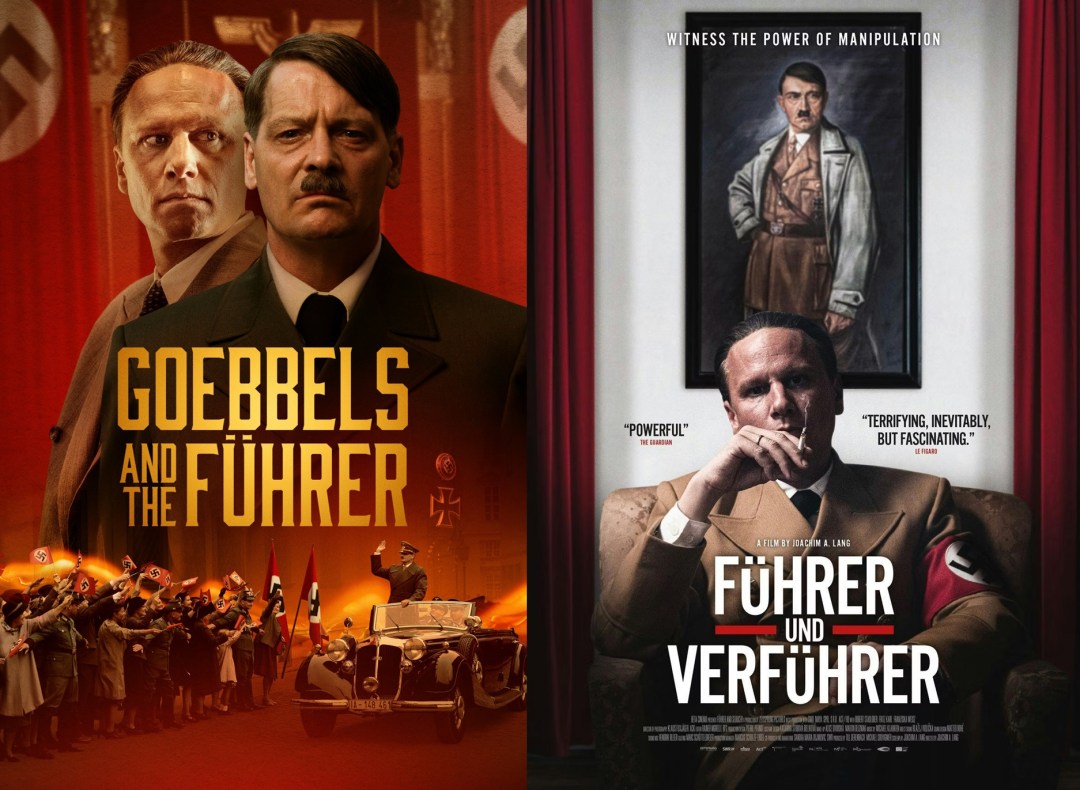
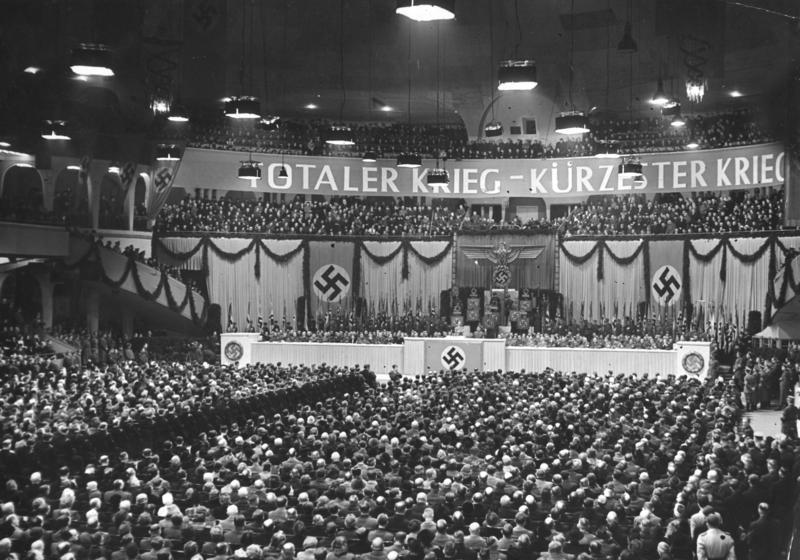
Curiously, ‘Sicherheit’ (security) barely entered his vocabulary, when, on February 18, 1943, Joseph Goebbels delivered Germany’s most important address on national security of the Second World War in Berlin’s Sportpalast arena. It was a speech that brings to the fore the deadly and dynamic interaction between Adolf Hitler’s quest for security (Sicherheit) and that of Joseph Goebbels for faith (Glauben). In the wake of his post-First World War politicization and radicalization, Hitler had developed National Socialist dogma in the service of his quest for security. Yet he had concluded that dogma was worth nothing unless internalized by millions of Germans and then externalized by them into a life of National Socialist action and struggle. For that process of internalization and externalization of faith in the service of security, he turned to Goebbels.Hitler’s and Goebbel’s respective quests seemingly existed independently from each other. Yet Goebbels’ quest for faith fed into Hitler’s one for security in a dynamic process, climaxing on February 18, 1943, as also depicted in ‘Führer und Verführer’. The first serious Hitler feature film in twenty years, the film (released in North America as ‘Goebbels and the Führer’) depicts the interaction of Hitler and Goebbels as well as the patterns of worlds wars of disinformation and demagoguery.
Goebbels’ disinterest in security
“Total war” was needed, Hitler’s propaganda minister told a live audience of 14,000 in the Sportpalast and millions more sitting in front of their radios, to face down “the mortal danger” (Todesgefahr) that had appeared on the continent’s gates.
In terms steeped in millennialism, with its belief in a final showdown of the forces of good and evil, Goebbels told his audience that the “international, Bolshevik-veiled capitalist tyranny” and the “world revolution of the Jews” posed an existential threat. That challenge required an existential all-or-nothing “struggle” for “everything”, which was “more total and radical than anything that we can even imagine today”. Germans and Europeans, he said, faced the imminent threat of their own “annihilation” (Vernichtung) and of an “demise of millennia-old cultures”. “Two thousand years of constructing the civilization (Menschheit) of the occident”, he said full of drama, “has been put at jeopardy”. What lay thus ahead was one of two choices: “annihilation” or “final total victory”.
Goebbels’ narrative was that of imminence: of “a European mission” to meet an “imminent” do-or-die threat, talking about the “imminent and serious threat to its life” that Europe faced, and a “danger that was immediate and imminent”. While thus painting the picture of an imminent mortal threat, he only mentioned the term ‘Sicherheit’ (security) twice. And he did so only in passing and without much meaning, in a speech totaling approximately 11,000 words. His focus was on the mobilization of Germans to commit themselves to a reactive solution to a specific security challenge. His quasi-millennial references to “final victory” were vacuous and transactional, as he did not spell out what the end of times after final victory would look like. In fact, neither did he lay out why final victory would be final, nor more broadly what it takes for an absence of war to endure and for external challenges to be kept enduringly at bay. This is little surprise for a man who never in his life had exhibited any sustained interest in ‘security’ as “the dynamic operationalization and protection of [a] state of peace, [or of absence of war], over time.”(see Beatrice de Graaf, Fighting Terror after Napoleon, p. 24) It is thus also little surprise that, in Berlin’s Sportpalast, Goebbels did not put his argument about the mortal danger Europe faced into a bigger conceptual frame about security.
Goebbels’ Conceptualizations of ‘Sicherheit’
When Goebbels explicitly talked in public about security, he did so in lukewarm, perfunctory, transactional, and unspecific terms. He generally did so when paying tribute, as he did in 1940, to frontline soldiers, “who stand guard for the security of our empire” or when occasionally stating in his speeches, as he did in 1944, that, with victory in the war, “freedom, security and a future” lay in store. Yet he had put no thought into what that promise of security entailed. Tellingly, the headline of the article covering his 1944 speech for the Völkischer Beobachter, the official Nazi newspaper, had shortened Goebbels’ promise to one for “freedom and a future”, purging his reference to “security”.
In Goebbels’ many diary reflections over the years about politics and public affairs, security as the “the dynamic operationalization and protection of [a] state of peace, [or of absence of war], over time” played not even second fiddle. When he talked about “Sicherheit”, he generally used the term in the sense of certainty, assurance, or confidence, or of personal safety, or the safety of an object. Security in the sense of national security is only mentioned in his diaries approximately thirty times over the years, and only a handful of times prior to the war. Even when he did talk about national security, he tended to do so only in a matter-of-fact way, such as when referring to national security matters of Finland, Australia, or Britain.
Only in 1942 and 1943, did Goebbels reflect a few times about the dynamic operationalization of security, laying out, for example, that the existence of a modernizing, westernizing, and united Russia constituted an unacceptable challenge to Germany’s national security, that “the interests of the security of the empire” trumped those of individuals, that a “brutality” of means and action was required “to ensure the security of our Reich”, and that there could be no security for the Reich without an elimination (Beseitigung) of Communism. But even in the middle of the war, after having kept diary almost all his adult life, Goebbels’ answers as to the success factors of an operationalization of security are at best rudimentary and fragmentary. And most tellingly and most importantly, his diary observations about security are devoid of any discussion of the role propaganda can and should play in the dynamic operationalization of security. His reluctance as chief propagandist of the Third Reich to commit himself to reflect about the role propaganda can play in sustaining and operationalizing security is a telltale sign of how little personal and professional interest he had in security.

Adolf Hitler’s Quest for Enduring Security
By stark contrast, for Adolf Hitler, security was everything. As Hitler stated in a speech delivered on September 6, 1938: “The security of the nation trumps everything else.” From the moment of his politicization and radicalization in 1919, security had been paramount for Hitler. The supreme political good in his eyes, security was the prism through which he looked at the world. Regaining security and a quest for sustainable security indeed lay at the heart of his politicization and radicalization as well as of his actions once in power. Unlike Goebbels, Hitler was thus seeking not piecemeal and reactive solutions to security challenges, but ever since 1919 had tried to identify the success factors of the dynamic operationalization of sustainable security for generations to come. They had also driven his statecraft since 1933.
Yet for an operationalization of his quest to restore security to Germany, Hitler urgently needed Goebbels. Hitler had concluded that security can never be a static state of being, but was a continual process. Only through the continual commitment of successive generations of Germans to National Socialism could Germany survive and could sustainable security be achieved. As Hitler thought that his fellow Germans were too inert and peace-loving, he concluded that the dynamic operationalizing and sustenance of security required a continual and not always honest process of new recruitment, mobilization, and inspiration of Germans for war and service in the name of National Socialism. And this explains why Goebbels was a key player in Hitler’s quest for security, despite the propaganda minister’s disinterest in security. Goebbels was a tool in Hitler’s hands to achieve popular mobilization and inspiration. For Hitler, it did not matter that Goebbels had no understanding of, and interest in security. What mattered was Goebbels’ talent of inspiring mobilization and commitment to a life of National Socialist action.
Hitler’s ideas about what it would take for Germany to be returned to an existence of sustainable security went well beyond his belief that Germans had to commit themselves to a continual life of National Socialist struggle in a quasi-millennial existential showdown. That was only one part of the equation for Hitler. Yet he saw no virtue in truthfully sharing with the public (or even with Goebbels for that matter) his full conception of the success factors of security. There are, in fact, good reasons to believe that privately he did not even believe in the millennialism that he himself had been preaching, yet transactionally believed was required to inspire people to commit themselves to a life of National Socialist action and put their lives on the line. And his propaganda minister was for Hitler the right man to formulate and push messages to inspire people to commit their lives to National Socialist action, due to Goebbels’ monomaniac lifelong fixation with “Glauben” (faith), both to inspire faith and to translate faith into action.
The Faith-Security Nexus at the Heart of National Socialist Rule
While Hitler’s mind was dominated by figuring out (and implementing) how to return Germany to sustainable security, Goebbels’ central obsession for most of his life was with “faith”. Born into a devout Catholic family, his childhood had been structured by faith and Catholicism. But as an adolescent, he abandoned his Catholicism as well as established religion, yet, unusually, did not turn on faith in the process. Faith was what made life worth living for Goebbels. Unlike for Hitler, for whom faith was a transactional means to an end – in the Nazi leader’s case to inspire people to commit themselves to a life of National Socialist action and thus to help sustain Germany’s security –, for Goebbels faith was an end in its own right.
For Goebbels, the act of believing and the acts that emanated from that belief were more important than the dogma towards which belief was directed. As he wrote in a semi-autobiographical novel, penned in his early twenties, “May God give you goals – no matter what they are”. For Goebbels, it was more important to believe than what you believe in. And he held that faith needed to be externalized fanatically. If people succeeded in that endeavor, their actions would drive them to victory whatever their endeavor. As he scribbled into his diary in 1924, “We must become berserkers of our fervor and our faith. Only then can we be victorious.” And the nexus of faith and faith-inspired action was what sustained him over the years. In his surviving diaries, there are more than 2,500 entries relating to faith and belief.
It was this commitment to “faith” and his talent to inspire faith that made Goebbels so attractive to Hitler and that lies at the heart of the lived faith-security nexus in which Hitler believed. As Hitler had stated in an August 1927 essay, Germany could only come back from the brink, regain security, and live if Germans entered into critical self-reflection about their own bad deeds of the past, regained faith, and translated that faith into National Socialist action and a willingness to fight. “The National Socialist movement”, he said, was driven by the conviction, “that a collapsed nation like Germany [can only] be redeemed […] by a new inner profession of faith that springs as much from self-reflection as from a determination to overcome the causes of its previous weaknesses” and that then inspires a life dedicated to struggle for Germany.
Similarly, when opening the 1929 Nazi Party Rally in Nuremberg, he argued that Germany was at the mercy of other nations “because our people have sinned against the very laws of life, because they have surrendered to the political vices of humanity that have always destroyed nations and states.” Yet he stressed the sins of the past could be overcome through a faith in National Socialism that was translated into action and a willingness to go fighting for the future of Germany. This is why Hitler thought Germany needed a new “National Socialist profession of faith” that would “rouse hundreds of thousands of people” to action.

In the 1920s, in speech after speech, Hitler emphasized the importance of the faith-security nexus. And on 20 January 1933, ten days before he came to power, he staged himself as a new Martin Luther, who would inspire a new reformation. “Here I stand because I can do no other”, he told local Nazi leaders in Berlin: “All of us among ourselves, we must show the people the spirit that this people needs.”That would allow the Germans of Hitler’s time “to enter into time as a generation of struggle” and allow them to tell their children one day: “We once bore heavy guilt and have now atoned for it again.”
Well in line with Hitler’s belief in the motivating and mobilizing force of “faith” and “professions of faith”, Goebbels made a new National Socialist catechism and profession of faith – echoing the structure of Protestant question-and-answer catechisms – the corner piece and the crescendo of his ‘Total war’ speech. Most of the eleven thousand words of his Sportpalast speech were a build-up to that profession. Prior to asking the audience to answer ten questions to profess their faith, Goebbels claimed: “The British claim that the German people have lost faith in victory”, only to ask his first question: “I ask you: Do you believe with the Führer and with us in the final, total victory of the German people?” It was also now that he asked his audience if they wanted total war, if their “trust and confidence in the Führer today [was] greater, more faithful and unshakeable than ever before”, and if they were willing to “swear to the front with a holy oath that the homeland will stand behind it with strong morale and will give it everything that is required to fight for and achieve victory”.
Almost drowned out by the cheers of the handpicked audience in response to his question, Goebbels concluded his speech: “In the greatest hour of destiny in the history of our nation, all of us pledge to you, pledge to the front, and pledge to the Führer that we want to weld the homeland together into a block of will on which the Führer and his fighting soldiers can rely unconditionally and blindly. […] We are thus treading the path to final victory. It is based on faith in the Führer. […] The nation is ready for anything. The Führer has commanded, we will follow him. If we have ever faithfully and unwaveringly believed in victory, it is in this hour of national reflection and inner uplift. […] Now people rise up and let the storm break!”
It was thus Goebbels’ commitment to spreading faith in the service of Hitler’s quest for security that explains why the most important address on national security of the Second World War revolved around the faith required to respond to a specific and existential threat to national security, rather than on security as such. The dynamic interaction between Hitler’s quest for security and of Goebbels’ quest for faith stands indeed at the very heart of the deadly and genocidal dynamics of the Third Reich, even if the latter quest was fully in service of the operationalizing of the former, i.e. of Hitler’s quest for sustainable security.
COVER IMAGE: Film poster Führer und Verführer/Goebbels and the Führer (2024). Source: Samuel Goldwyn Films & Dutch Film Works.
Opinion pieces have been published by the Security History Network for the purpose of encouraging informed discussions and debates on topics surrounding security history. The views expressed by authors do not necessarily represent the views of the SHN, its partners, convenors or members.
 The Security History Network