
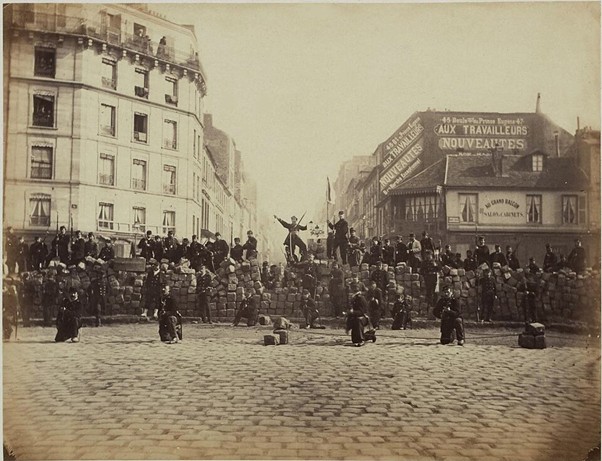
In this blog, Magnus Gislason revisits the Paris Commune of 1871 through the lens of security. While often framed as a threat to the French state amid invasion and collapse, the Commune can also be understood from the communards’ own security concerns. By tracing the emergence of a revolutionary “security culture from below,” the blog shows how dominant notions of order and protection were challenged, even if no coherent alternative ever fully took shape.
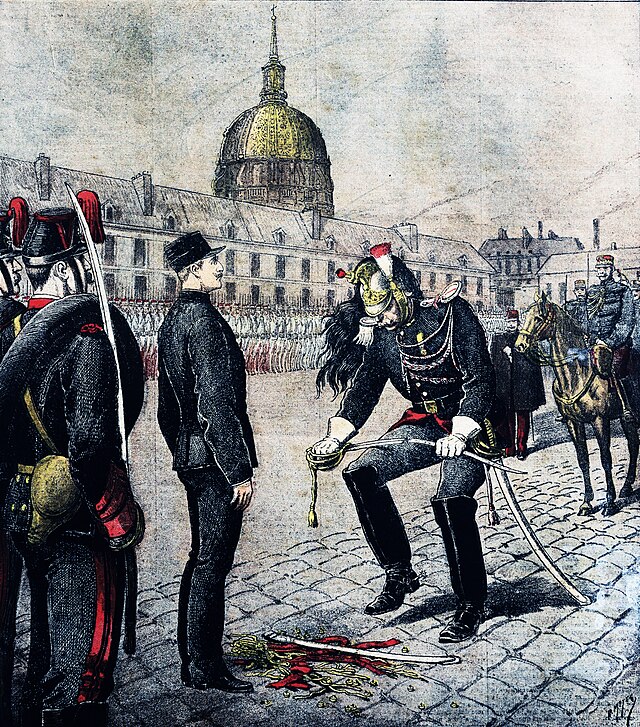
‘Death to the Traitor’: Securitization and the Dreyfus Affair
In this article, Anne Weiler examines how the Dreyfus Affair became a process of securitization in which Alfred Dreyfus was framed as an existential threat to the French nation. By analyzing the role of the French Army, antisemitic nationalism, and propaganda, she shows how fear, prejudice, and political instability enabled extreme measures to be justified in the name of security. Through media representations and symbolic narratives, the article highlights how the affair transformed from a judicial case into a powerful political and cultural struggle, revealing the dangers of weaponizing security discourse in times of crisis.


Wilhelm I as German Emperor: Staging the Kaiser
In this article, Frank Sterkenburgh argues that Wilhelm I, not Wilhelm II, was the true architect of the German imperial role, using self-staging and historical symbolism to establish the monarchy as a central political force in the newly unified German Empire. It challenges long-held views by showing Wilhelm I’s active role in shaping the identity and legitimacy of the Kaiser.
 The Security History Network