
Yasaman Roustayar
Yasaman Roustayar is a bachelor’s student in Cultural Anthropology at Utrecht University. She wrote this blog as part of the Historicizing Security course.
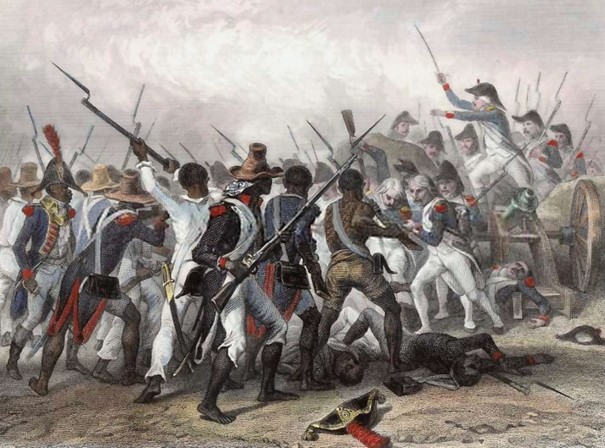
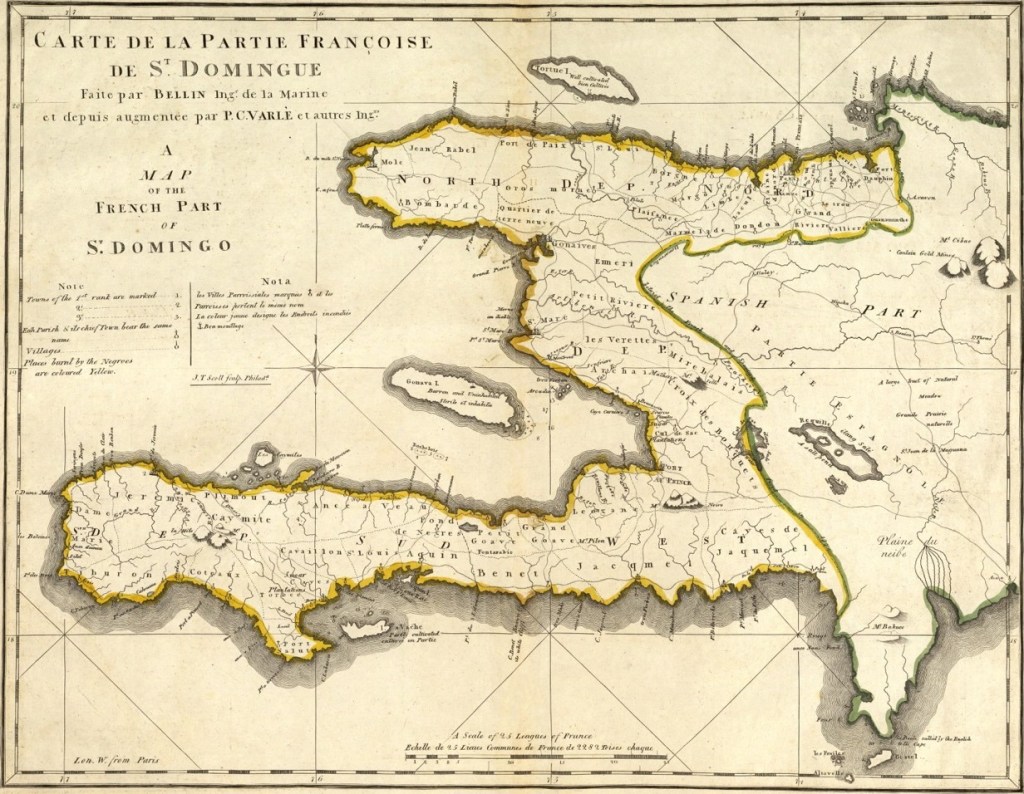
The Haitian Revolution of 1791 marked an unprecedented rupture in the colonial Atlantic world. What began as a coordinated uprising of enslaved people in the northern plains of the French colony of Saint-Domingue rapidly evolved into the most radical and successful slave revolution in modern history, culminating in the abolition of slavery and the establishment of Haiti as the first independent Black republic in 1804. Despite its political significance, reports of the revolution were often suppressed or mischaracterized in European metropoles. As anthropologist Michel-Rolph Trouillot argues, the very notion of enslaved Black people engaging in political revolution was so incompatible with Enlightenment racial ontology that it rendered the event “unthinkable” within dominant historical narratives. European media representations framed the uprising as barbarian threats to white civilization, justifying racial inequality and colonial repression. These depictions shaped perceptions of the revolution in the British metropole. Rather than recognizing the revolution as a legitimate struggle for freedom, British elites framed it as a crisis that endangered the political and ideological foundations of empire. Drawing on the concept of security culture, this post examines how British politicians, writers, and newspapers constructed racialized narratives that transformed Black revolution into a security issue, revealing how the constructed nature of threat became a key instrument of British imperial governance.
The Construction of British Security Culture
The ways in which British colonial elites in 1791 engaged with the Haitian Revolution can be analyzed through the concept of security culture. Drawing on the framework developed by Beatrice de Graaf, Ido de Haan, and Brian Vick, security culture refers to the shared practices, institutions, and mentalities through which political elites define, identify, and act upon threats to social and political order. In the late eighteenth century, British elites shared a racialized understanding of imperial threat, seeing in the Haitian Revolution not a struggle for freedom but an existential danger to imperial order. Their security culture was thus structured by anxieties over race and imperial authority; a collective fear, embedded in a trans-imperial discourse. European newspapers had long portrayed enslaved Africans as violent and subhuman, framing earlier uprisings such as the 1763 Berbice rebellion as evidence of innate savagery. When revolt broke out in Saint-Domingue, this interpretive pattern persisted, emphasizing irrational violence rather than legitimate resistance. These narratives fed British imaginaries of race and order, helping to construct an imperial logic of security in which Black resistance was synonymous with a disruption of order.
A Racialized Culture of Fear
Through this racialized security culture, British observers, including parliamentarians, journalists, and colonial spokesmen, reacted not simply out of geopolitical concern but also out of epistemic and affective insecurity. The fear of the disruption of the transnational colonial order of security and white supremacy found a receptive audience among British planters, merchants, and politicians who quickly aligned around a shared sense of alarm. The Haitian Revolution exposed the fragility of white control and forced these elites to confront the uncomfortable reality that enslaved populations, long treated as property, could act as autonomous and potentially sovereign agents. Consequently, British discourse depicted Black insurgents as criminals or monsters rather than legitimate political actors reacting to decades of oppression, reinforcing a hierarchy in which whiteness signified order and Blackness symbolized insecurity.
British elites thus not only reacted to but actively constructed the idea of threat, turning Black political agency into a justification for repression and surveillance. This process was visible in British discourse, media, and policy. Bryan Edwards, a Jamaican planter and Member of the Parliament, became one of its most influential voices. In his 1797 Historical Survey of St. Domingo, he portrayed enslaved Africans as barbarous and incapable of reasoned political behavior, claiming the revolution was the result of misguided Enlightenment abolitionism rather than systemic oppression. Similarly, MP William Cobbett’s Political Register (1804) described the rebels as “bloodthirsty monsters,” invoking demonic imagery to equate rebellion with moral decay and chaos. Such depictions denied political legitimacy to the revolution and justified repressive measures, such as military interventions that would follow the Haitian Revolution between 1793 and 1798.
British Discourse, Media, and Military Response
Mainstream newspapers echoed these racialized views. The Times focused on the economic losses and white suffering caused by the revolt, largely omitting its political motivations. An article from October 1791 lamented the “dreadful slaughter” of whites and the destruction of plantations, while emphasizing damage to trade and falling stock prices, making racial violence a backdrop to commercial anxiety. The Times furthermore blamed French abolitionism for the “mischief,” labeling slave uprisings as results of misguided reform, rather than acknowledging systemic oppression. The revolution was thus framed as senseless violence, not strategic resistance, reinforcing elite fears and public support for containment. Like political discourse, press narratives delegitimized Haiti’s Revolution and denied its message of Black freedom.
The securitization of the Haitian Revolution reached its most overt form in Britain’s decision to intervene militarily in Saint-Domingue between 1793 and 1798. Though officially justified by war with France, the intervention reflected deeper anxieties about racial contagion and potential slave uprisings in British colonies. The failure of French control was interpreted as a collapse of white supremacy, prompting Britain to act not merely against a rival power but to defend a racialized imperial order. The intervention failed militarily but revealed how racialized fear and securitization shaped imperial policy, using the language of defense to preserve white supremacy and property.
From Rhetoric to Repression
To conclude, British colonial elites in the metropole responded to the 1791 Haitian Revolution through a racialized security culture that identified Black political agency as an existential threat to imperial stability. The revolution challenged the very foundations of empire, which presumed the incompatibility of Blackness with freedom and governance, and was met with a multifaceted security response encompassing racialized rhetoric, press coverage, and military intervention. By casting Black freedom as a threat to civilization, British elites justified exceptional measures and created a security system that endured within the British colonial empire. Historicizing this process exposes the imperial roots of modern security thinking. Understanding this constructed nature of threat in the context of the Haitian Revolution reveals how fear and hierarchy became tools of imperial rule, and encourages critical theory on how their legacies persist in the ways security continues to be imagined today.
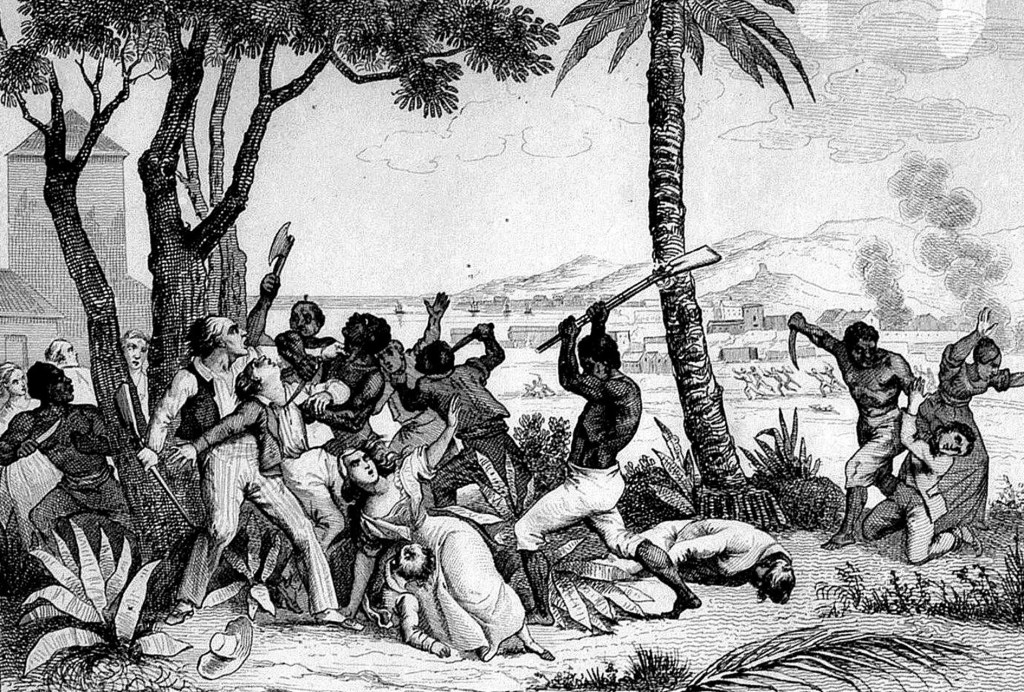
COVER IMAGE: Historical engraving (1839) depicting a scene from the Haitian Revolution, designed by Auguste Raffet and engraved by Hébert. Source: Wikimedia Commons
Opinion pieces have been published by the Security History Network for the purpose of encouraging informed discussions and debates on topics surrounding security history. The views expressed by authors do not necessarily represent the views of the SHN, its partners, convenors or members.


