
Lars Janssen
Lars Janssen is a member of the Security History Network and a PhD candidate at Utrecht University. In his research, Lars examines how imperial powers shaped international law during the nineteenth century. Specifically, he currently focuses on the Río de la Plata region in South America, and the establishment of arbitration commissions between European and South American countries.
Tariffs have been a major tool for Trump to meddle in Brazilian politics. The July 2025 tariffs were intended to halt the prosecution of former President Jair Bolsonaro. More recently, in July 2026, with relations between the US and Brazil strained, Trump announced a new round of tariffs on Brazilian goods. Such foreign pressures on Brazil’s jurisdiction and sovereignty are far from new in the country’s history. One particularly striking episode occurred between 1858–1865, when the Empire of Brazil found itself humiliated after a diplomatic dispute with Britain. Yet the experience also taught Brazil some lessons that it would immediately apply.
The State Council devises a plan
On 12 March 1858, three high-ranking statesmen of the Brazilian Empire met at the Secretary of Foreign Affairs in Rio de Janeiro. They were part of the State Council, an influential government body that advised the emperor Dom Pedro II. The issue at hand: the British government had requested Brazil to financially compensate two British merchants for damages to their property.
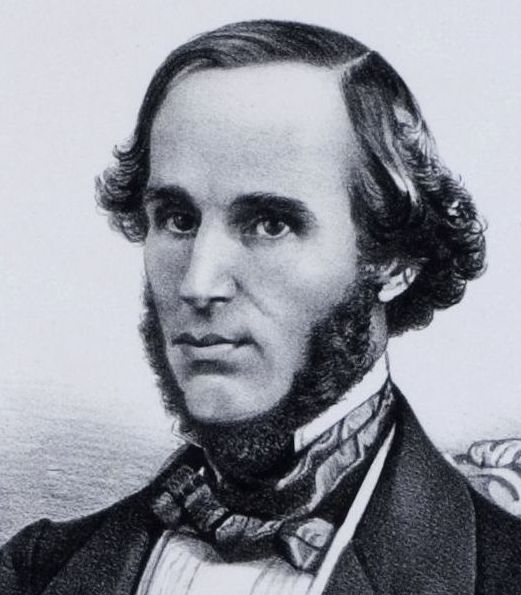
Councilor Sérgio Teixeira de Macedo saw the case as exemplary of a bigger problem. In recent years, he noted, the Great Powers had made a habit of ‘always supporting the claims of their subjects’, regardless of whether these claims were just or not. He worried that this created a ‘system’ that enabled foreign merchants to enrich themselves by fabricating ‘fantastic losses’. He pointed to a recent claims scandal in the US as a cautionary tale, in which a dentist was discovered to have received $480,000 in damages for nonexistent silver mines in Mexico. Brazil had to avoid a similar situation, otherwise it would be left with a hefty bill to pay.
Only a rigorous legal process could prevent such fraud. The British, however, had no faith in the Brazilian legal system. They proposed to submit the claims to an international arbitration commission in which two arbitrators – one from each country – would study the claims and decide on the amount to be paid. What did the State Council think of this? Surely, it must have thought settling the claims outside of Brazil’s legal system infringed on Brazil’s legal sovereignty?
Surprisingly, the Councilors did not. Macedo actually suggested to accept the British proposal. There were strategic reasons behind his advice. Brazilian subjects also had many long-outstanding claims against the British government. The majority of these claims were related to decades of British policing against the slave trade. As Brazil was one of the few countries where slavery was still legal, many Brazilian ships had been captured by the British navy, most justifiably so, but not all. The Council hoped that a commission could also settle these cases.
The only problem was that the British government had consistently refused to accept responsibility for all claims related to the slave trade. So, the Council devised a nifty plan. Macedo suggested that his colleagues could try to influence the wording of the clauses, specifically evading ‘date limitations or classifications that excluded the Brazilian claims’. They were essentially hoping to trick the British government into a treaty that would bind it to compensate Brazilian claims. Having formed this plan, the Council concluded its meeting.
The escalation
On 20 October 1862, the Brazilian State Council held another meeting on the topic. This time the mood was grim: Britain had just seized five Brazilian merchant ships off the coast of Rio de Janeiro to pressure Brazil to pay the outstanding claims. What had happened to the Council’s plan?
Initially, everything had gone exactly as Macedo and his colleagues had intended. On 2 June 1858, Brazil and Britain concluded a treaty to settle their outstanding claims and the Brazilian negotiator had managed to keep the wording vague enough to include the Brazilian claims. But as the commission proceeded to work on the cases, the trick quickly became apparent to the British. The British demanded that the treaty be amended. For the Brazilian government, however, this became a matter of national dignity, and so they refused.
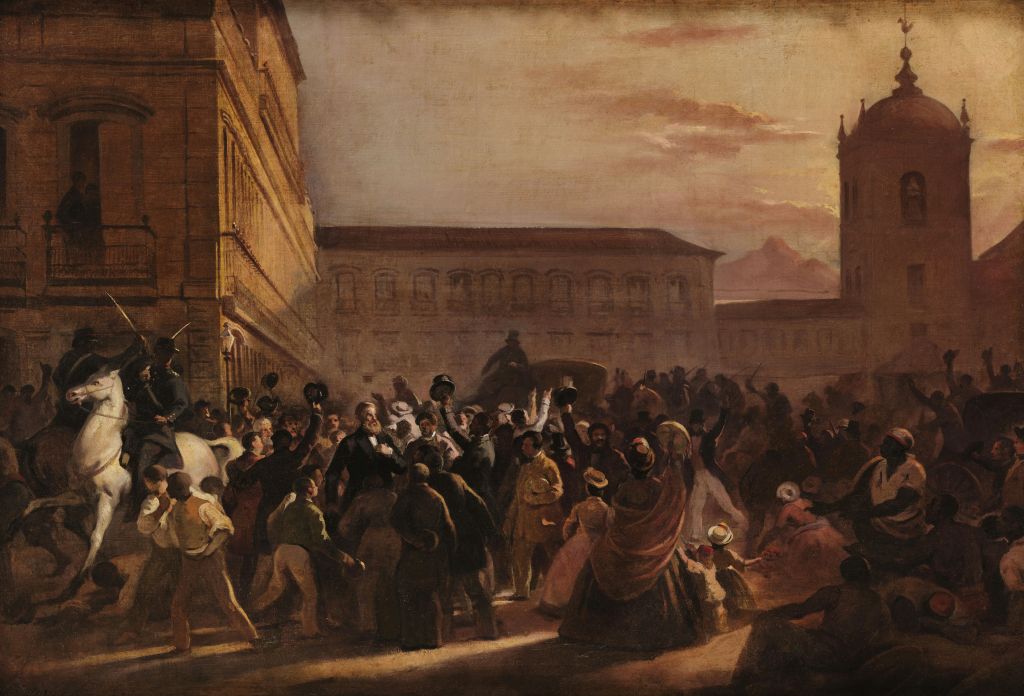
This was when Britain decided enough was enough. The Royal Navy seized five ships as a reprisal and delivered an ultimatum for Brazil to pay up. Arbitration and the consideration of the Brazilian claims were no longer included in the ultimatum. The British minister in Brazil, William D. Christie, remarked: ‘[it] may teach them that Her Majesty’s Government, though patient and forbearing, will not in the end allow themselves to be trifled with’.
The councillors were deeply upset with the situation: ‘This was not simply a question of indemnification and money … [it] was inseparably tied to grave questions of independence and national sovereignty’. Yet, they had little choice but to bow their heads. They were scared of war with the world’s biggest empire. While Britain held the power to simply deny its legal responsibility and force others to accept theirs, Brazil did not.
The bullied becomes the bully
In these same years, Brazil was also involved in another claims dispute with its southern neighbour Uruguay. But this time, it was Brazil that put on the pressure. It sought justice for the ‘barbarous confiscations’ of the property of Brazilians in Uruguay.
The initial negotiations proceeded on relatively good terms. In 1857, a treaty ensued that recognized the legitimacy of the Brazilian claims. However, over the years, the claims issue continued to fester between the countries, alongside a range of other disputes. Brazilian politicians increasingly saw Uruguayan inaction as ‘a proof of bad faith’. In May 1864, Brazil therefore made one final diplomatic attempt by sending José Antônio Saraiva on a mission to negotiate a settlement.

Saraiva’s mission had a different tone than previous negotiations. Adopting the British playbook of gunboat diplomacy, Brazilian warships were anchored nearby and troops gathered at the Uruguayan border. Even so, Uruguay refused to yield to the pressure. When Saraiva presented a total of 63 claims, Uruguayan politician Juan José Herrera responded wryly that over a period of 12 years, and with a population of 40,000 Brazilians in Uruguay, 63 claims were hardly significant. In return, Herrera then presented a detailed list of 48 claims by Uruguayans against Brazil.
This was not the reply Saraiva had hoped for, and he decided to escalate matters. On 4 August, Saraiva issued an ultimatum giving Uruguay six days to satisfy the Brazilian claims. When the Uruguayan government rejected these demands, Brazil was prepared to ‘take justice into its own hands’.
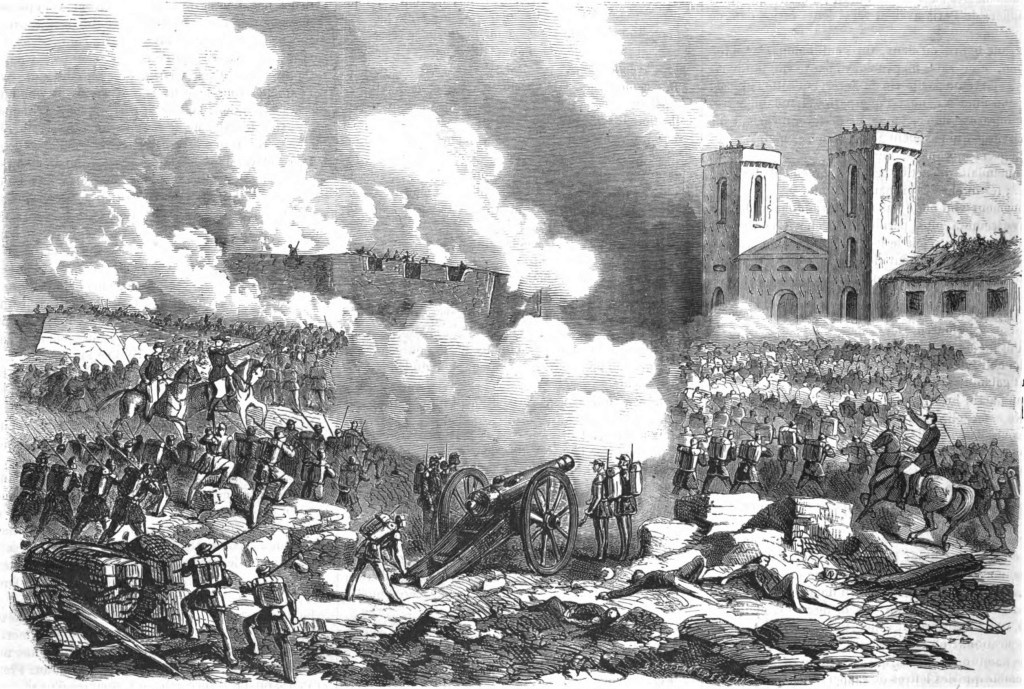
On 11 August, Brazilian forces entered Uruguay and occupied several territories as a reprisal for the claims of Brazilian subjects. At the same time, Brazil allied itself with the Uruguayan opposition leader, General Venancio Flores, who recognized the ‘undeniable justice’ of the Brazilian claims and promised reparations once his revolution had triumphed. Over the following months, the combined forces defeated the government in Montevideo, and in early 1865 Flores was installed as president. The peace agreement concluded on 20 February once again recognized the legitimacy of the Brazilian claims.
Two faces of a tropical empire
Taken together, the two disputes over claims paint a curious picture of how Brazil navigated an imperial world. The British Empire had shown Brazil firsthand how and when international law could be used to justify military threats and escalation. Brazil then imitated these practices and applied them as rules of a playbook to pursue its own political goals in Uruguay. It had learned that international law could be a weapon of empire. And when the opportunity arose, it wielded that weapon itself.
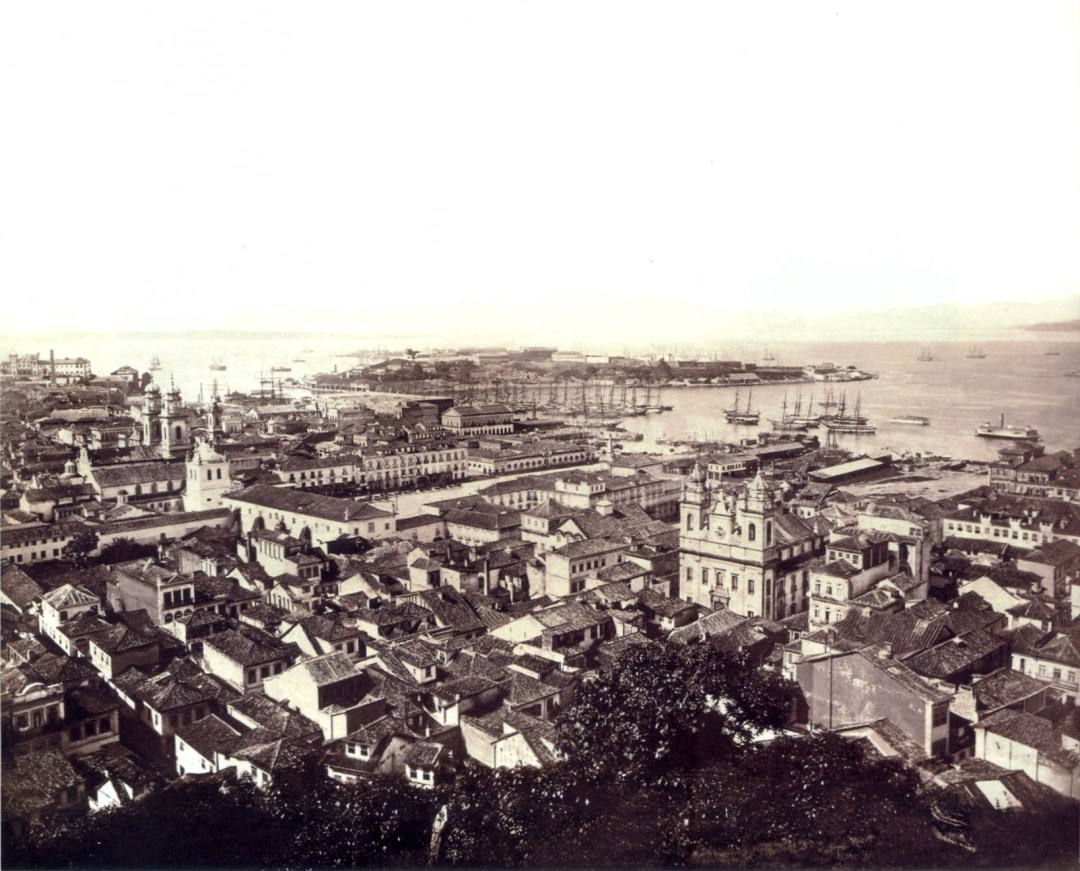
COVER IMAGE: Rio de Janeiro in 1865. Source: Wikimedia Commons
Opinion pieces have been published by the Security History Network for the purpose of encouraging informed discussions and debates on topics surrounding security history. The views expressed by authors do not necessarily represent the views of the SHN, its partners, convenors or members.

